
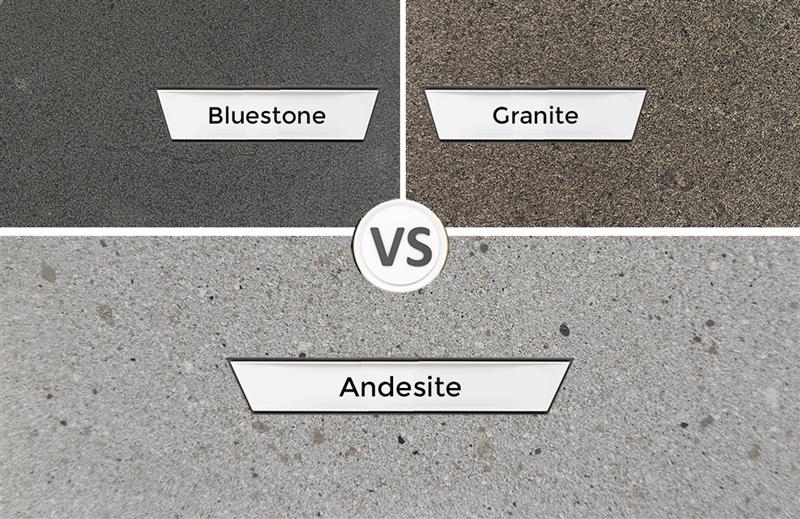
Bluestones and granite are two popular natural stone categories in Australia, mainly thanks to their durability and affordability. Andesites are very similar to granites and basalts. Like granites and basalts, Andesites are a kind of volcanic rock. Although they are offering some superior physical and performance qualities, they are less known in Australia construction market.
Like granites and bluestones, andesite features hardness (durability), high consistency- with virtually no variation, low porosity (stain resistance) and excellent slip resistance. But low heat absorption is the feature make andesite crucially standout compared to dark bluestone. The feature can particularly be a privilege in Australia outdoor paving and pool construction where managing surface heat is a significant consideration.
What is Andesite? The Volcanic Stone You Need to Know About
Among the three primary rock groups, i.e., igneous, sedimentary and metamorphic, limestone, travertine and sandstone fall in the sedimentary group, whereas marbles fall in the metamorphic group.
Geologically, the first group of rocks, igneous, is formed from magma in volcanic eruption. These rocks don’t have the obvious layers, don’t contain fossils, don’t react with acids, and can be made of different minerals. They sometimes have bubbles or holes may appear glass-like.
The exact quantities of iron, magnesium, silica, and some other chemicals play a crucial role in determining the class of rocks. Based on their methods of formation and the composition, igneous rocks represent a broad spectrum, classified into andesite, granites, basalt, rhyolite, and diorites.

How is Andesite Stone Formed?
Andesite is an igneous, volcanic rock, formed from a volcanic activity as the name suggests. The composition of this particular rock is halfway between granite and basalt. The rock is fine-grained, formed after the eruption of magma onto the surface. After a magma eruption, it cools and crystallizes quickly. The lava is composed of small crystals and cools down rapidly when at the surface. The mineral grains are so small that they cannot be seen clearly with the naked eye.
Like andesite, diorite is a coarse-grained igneous rock formed when the magma remains below the Earth’s surface and thus cools down slowly. The slow cooling process facilitates the growth of large mineral crystals in the rock. This rock also has a composition halfway between basalt and granite.
Both andesite and diorite are common rocks of the continental crust above subduction zones, and are typically formed after an oceanic plate melts during its descent into the subduction zone. This produces a source of magma.
Research shows that the granite and basalt intermediate compositions of both andesite and diorite may be because of the formation of their parent magmas after the partial melting of a basaltic oceanic plate and melting of granitic rocks.
Six Key Advantages of Using Andesite for Your Outdoor Pavers
Bali Andesite, Java Andesite and Green Andesite are a few popular Lava Stone Pavers sourced from volcanic islands of Indonesia, Thailand and Vietnam. The natural stones typically used for pool paving because of their amazing thermal property and superior grip.
The natural andesite pavers provide Characterises, making it a perfect choice for harsh Aussie climate.
Unbeatable hardness and durability: Although granite pavers remain the hardest natural products, andesite pavers offer a comparable strength for paving applications, often at a more competitive price point. Andesite stone is highly durable and resistant to wear, weather conditions, and chemical effects, a long-lasting natural stone product which maintains its integrity over time. Like granites, andesite are the best heavy-duty options for Heavy traffic areas.
Low porosity: Lack of porosity is another aspect of andesite durable structure, resulting in stain resistance and low maintenance and enhancing the product practicality.
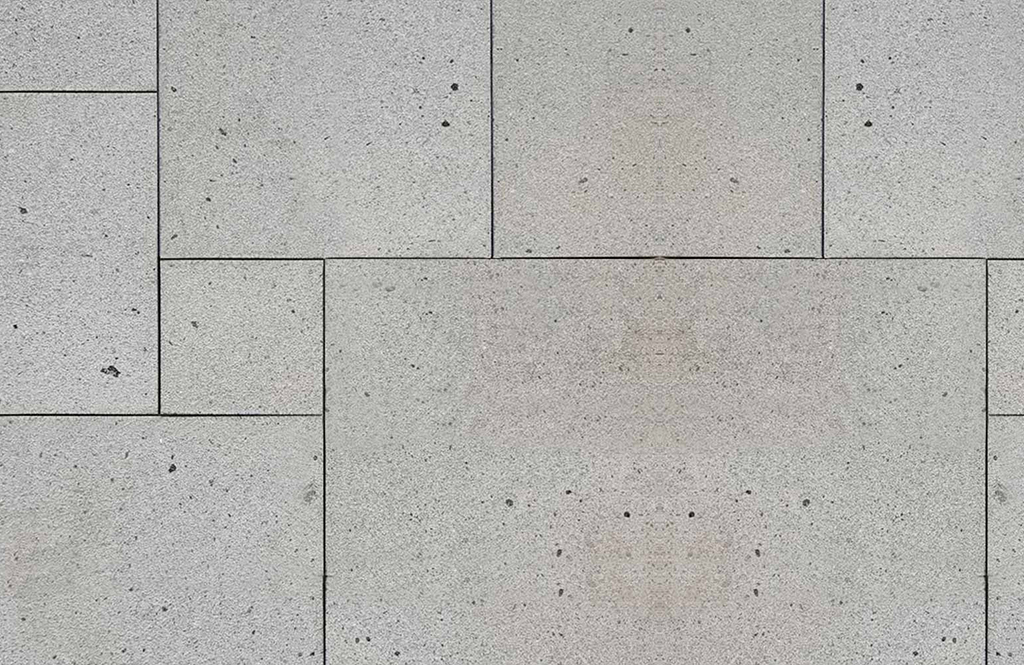
Aesthetic Appearance: With a variety of colours and textures- shades of grey, green-grey, and sometimes orangish tones and its speckled appearance – andesite tiles provide a great decorative appearance.
Andesite texture is peppered with coloured mineral chips, creating a natural terrazzo look that manufactured options simply cannot replicate. With its consistent solid colour and terrazzo pattern, this natural stone is an excellent choice for modern landscape designs, adding character and beauty to outdoor spaces.
High Consistency: Fine grains create a speckled texture to the most of Andesites that is completely consistence. With no variation, andesite can be an excellent alternative for granite and bluestone where you are looking for a simple, uniform surface for your outdoor space.
Slip resistance: Andesite surface offers excellent grip features, thanks to its composition including fine quartz, silica and feldspar. Typically, andesite natural pavers are processed in raw, sandblasted or shotblasted finishes.
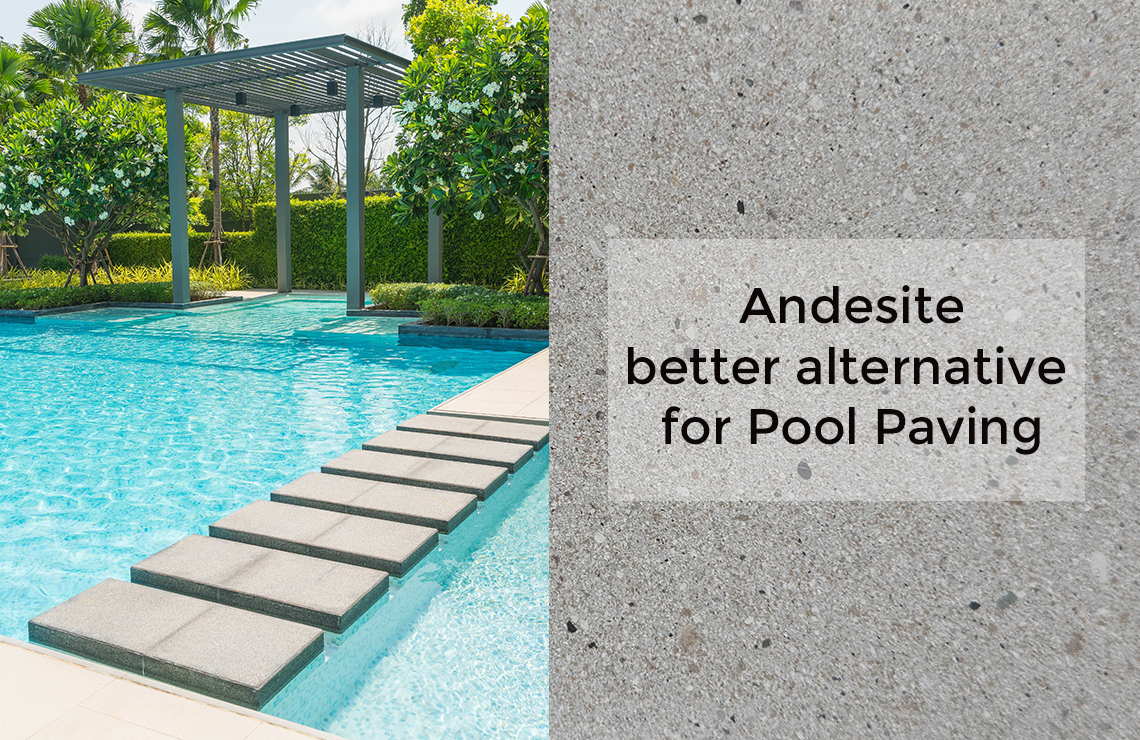
Heat Absorption: compared to dark bluestone and granites, its lower heat absorption rate stands out as a huge construction point for Australia and its harsh summers. Andesite’s low heat absorption plus its perfect nonslip texture makes it a smart, cooler option for pools. Stay cool and safe with Atlas Tile & Stone andesites products for your pool surround.
Main Applications of Andesite in Australia
Thanks to its durability and weather resistance, andesite is widely used in Australia for construction and landscaping.
1. Construction Material:
- Roads & Infrastructure: Used as road gravel, railroad ties, and in high-traffic asphalt and concrete for stability and wear resistance.
- Facades & Cladding: Extensively used for building veneers, external walls, stair treads, and curbing, both indoors and outdoors.
- Paving & Tiles: Ideal for outdoor and indoor paving, including pool surrounds, pavements, and tiles, thanks to its impact and scratch resistance and non-slip surface when wet.
2. Landscaping & Decoration:
- Outdoor Projects: Suitable for paving stones, pathways, landscape features, and retaining walls.
- Architectural Features: Used in columns, statues, and fireplaces.
- Monuments & Sculptures: Valued for its workability and fine-grained texture, historically used in monuments worldwide.
Overall, andesite’s combination of strength and aesthetic versatility makes it a top choice for both functional and decorative applications in indoor and outdoor spaces across Australia.
Andesite vs. Bluestone: A Head-to-Head Comparison for Aussie Backyards
Bluestones, the most popular and affordable outdoor pavers in Australia, are basaltic stones. Like andesite, they are a category of igneous rocks’ spectrum.
The silica and iron content contribute to the main difference between andesite and bluestone. Bluestone is lower in silica (mafic) (45-53%) with higher iron and magnesium content, causing it to look black, while andesite is intermediate in silica (57–63%). Andesites offer lighter colours than basalt because they contain less iron and more silica.
The high iron content and the black colour make bluestone get rapidly very hot.
| Feature | Basaltic Lava | Andesitic Lava |
| Silica Content | Low (45-53%) | Moderate (57-63%) |
| Temperature | Higher (1000-1200°C) | Cooler (750-950°C) |
| Viscosity | Low (Fluid) | High (Sticky) |
| Color | Dark grey to black | Light to dark grey, sometimes bluish |
Andesite vs. Granite: Which Paver Wins for Durability and Style?
Granite is a coarse-grained, intrusive igneous rock composed mainly of quartz, alkali feldspar, and plagioclase. Andesite, on the other hand, is an extrusive volcanic rock with a fine-grained texture.
Both rocks form from the slow cooling and crystallization of magma. However, granite cools slowly deep beneath the Earth’s surface, allowing mineral crystals to grow large enough to create a coarse-grained, speckled or crystalline appearance in a variety of colours like grey, black, brown, white, and pink.
Is Andesite Stronger Than Granite for Paving?
While granite is renowned for its hardness and durability, andesite offers comparable strength for paving applications, with a more subtle and modern aesthetic—often at a more competitive price point.
Additionally, granite has a higher silica content, which requires careful consideration of silica-related factors during selection and installation
| Feature | Granitic Lava | Andesitic Lava |
| Silica Content | High (65-75%) | Moderate (57-63%) |
| Temperature | 650-800 °C | Hotter (750-950°C) |
| Viscosity | Very high (Sticky) | High (Sticky) |
| Color | Ligh grey to black to pink | Light to dark grey, sometimes bluish. |
Design Inspiration: Styling Your Patio or Pool Area with Atlas tile and Stone’s Andesites
Shop premium Andesite pavers at Atlas Tile & Stone. Ideal for pool surrounds, Andesite is durable, slip-resistant, and stays cooler than bluestone. The perfect modern alternative to granite & bluestone for Australian homes.
Transform your outdoor space with Andesite and experience stylish, long-lasting excellence at cost-effective range.